What the Wear Layer on Luxury Vinyl Plank Actually Means
The number printed in small type on the box tells you more about how long a floor will look good than the color ever will.
August 26, 2026 · 4 min read
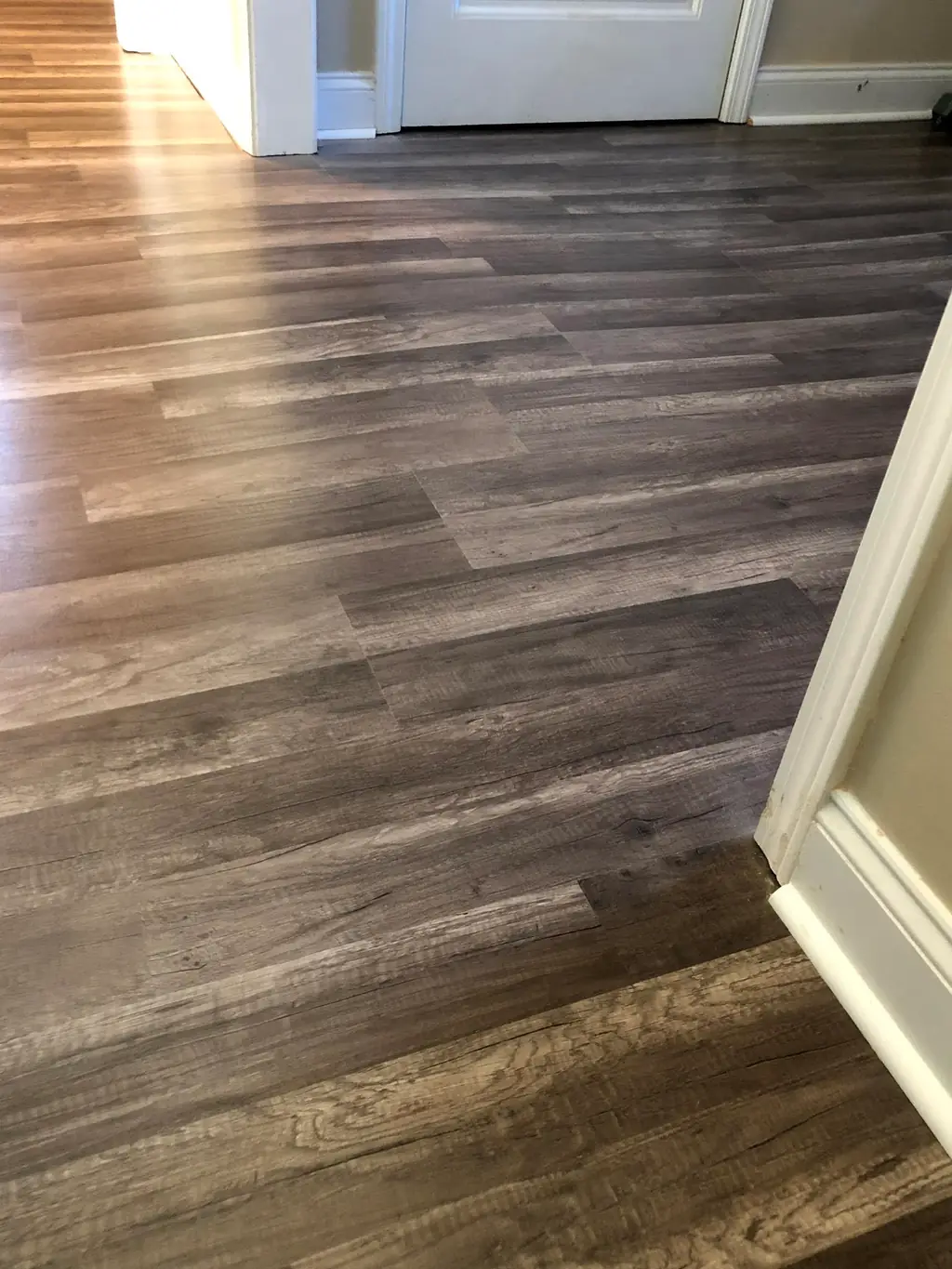
The Number That Matters More Than the Color
Stand in front of a wall of luxury vinyl plank samples and it's natural to reach for the one whose color you like best. The detail that actually decides how that floor looks in five years is printed in small type on the box: the wear layer. That's the clear protective coating sitting on top of the printed design layer, between your shoes and the pattern underneath. It's measured in mils, and it's the single biggest factor in whether a floor still looks new after years of foot traffic or starts showing a dull, scuffed path down the middle of the hallway.
Most residential LVP on the market falls somewhere between 6 mil and 20 mil. A thinner wear layer isn't automatically the wrong pick. It's a decision that should match how hard a room actually gets used, not just which sample caught the light best under the showroom fixtures.
Matching Thickness to the Room
Not every room in a house takes the same punishment, and the wear layer you'd want in a mudroom isn't the one you need in a guest bedroom nobody sleeps in more than a few nights a year.
- Light-traffic rooms like formal living rooms or guest bedrooms can perform well with a lighter wear layer, since they simply don't see the daily wear other rooms do
- Everyday spaces such as kitchens, hallways and family rooms hold up better with a mid to heavy wear layer, given the daily combination of foot traffic, chair legs and dropped items
- Homes with dogs or cats tend to do best with a heavier wear layer paired with a matte or textured finish, since gloss finishes show claw scuffs faster than a textured surface does
- A rental property or a home you plan to sell within a few years may not need the heaviest wear layer on the shelf, since the floor won't be carrying decades of use under one owner
The Wear Layer Isn't the Whole Floor
A wear layer sits on top of a printed design layer, which sits on a core, and the core is doing its own separate job. A rigid core resists dents from furniture legs and stays flatter over a slightly uneven subfloor, while a more flexible core can feel a little warmer and quieter underfoot. The backing layer underneath handles moisture resistance, which matters more than most homeowners expect in a slab built house, where humidity moves up through concrete year round. None of that shows up when you're comparing two samples side by side, which is exactly why it's worth asking questions instead of judging a plank purely by its face.
What Actually Wears Out First
A vinyl floor rarely fails by tearing or cracking. It fails by dulling. Grit tracked in on shoes acts like fine sandpaper every time it gets ground underfoot, and over months that's what puts a faint, permanently duller path down a well walked hallway before anything else on the floor has changed. A walk off mat at every exterior door catches most of that grit before it reaches the floor. Felt pads under chair and table legs matter just as much, since dragging a dining chair across bare vinyl day after day scuffs through a finish far faster than plain footsteps ever will.
Finish and Texture Do Some of the Wear Layer's Job Too
The wear layer's mil rating isn't the only thing standing between a plank and a scuffed finish. A gloss or semi-gloss finish shows every scratch and paw print because light reflects straight off the surface, while a matte or embossed texture scatters that light and hides the same amount of surface wear almost completely. A textured, low-sheen finish also tends to feel less slippery underfoot in bare feet or socks, which matters in a bathroom hallway or a kitchen where water occasionally ends up on the floor. Two boards with the identical wear layer thickness can genuinely look and perform differently in daily life once finish and texture are factored in, which is another reason to look at samples in person rather than by wear layer number alone.
See It in Your Own Light Before You Decide
Sample boards under showroom lighting look different from the same plank sitting under the window in your own living room. Bring a board home if you can, or ask to view it near the room you're flooring, because a color that reads warm and neutral under fluorescent light can look colder or pinker once it's installed under natural daylight. Superior Flooring Solutions keeps a walk in showroom on Carl Vinson Parkway in Warner Robins with sample boards you can look at, ask about, and take a picture of before committing to anything. For help narrowing down wear layer and finish for a specific room, call (478) 449-4220 or stop by Monday through Friday, 9 a.m. to 5:30 p.m.
Superior Flooring Solutions, (478) 449-4220
Call (478) 449-4220More articles
LVP vs Tile vs Wood-Look: Choosing the Right Floor for a Middle Georgia Home
The right material often comes down to the room and the climate before it ever comes down to style.
What Happens on Flooring Install Day, and What to Move Beforehand
Knowing what the crew needs from you before they arrive is the easiest way to keep the day moving.