What Happens on Flooring Install Day, and What to Move Beforehand
Knowing what the crew needs from you before they arrive is the easiest way to keep the day moving.
August 26, 2026 · 3 min read
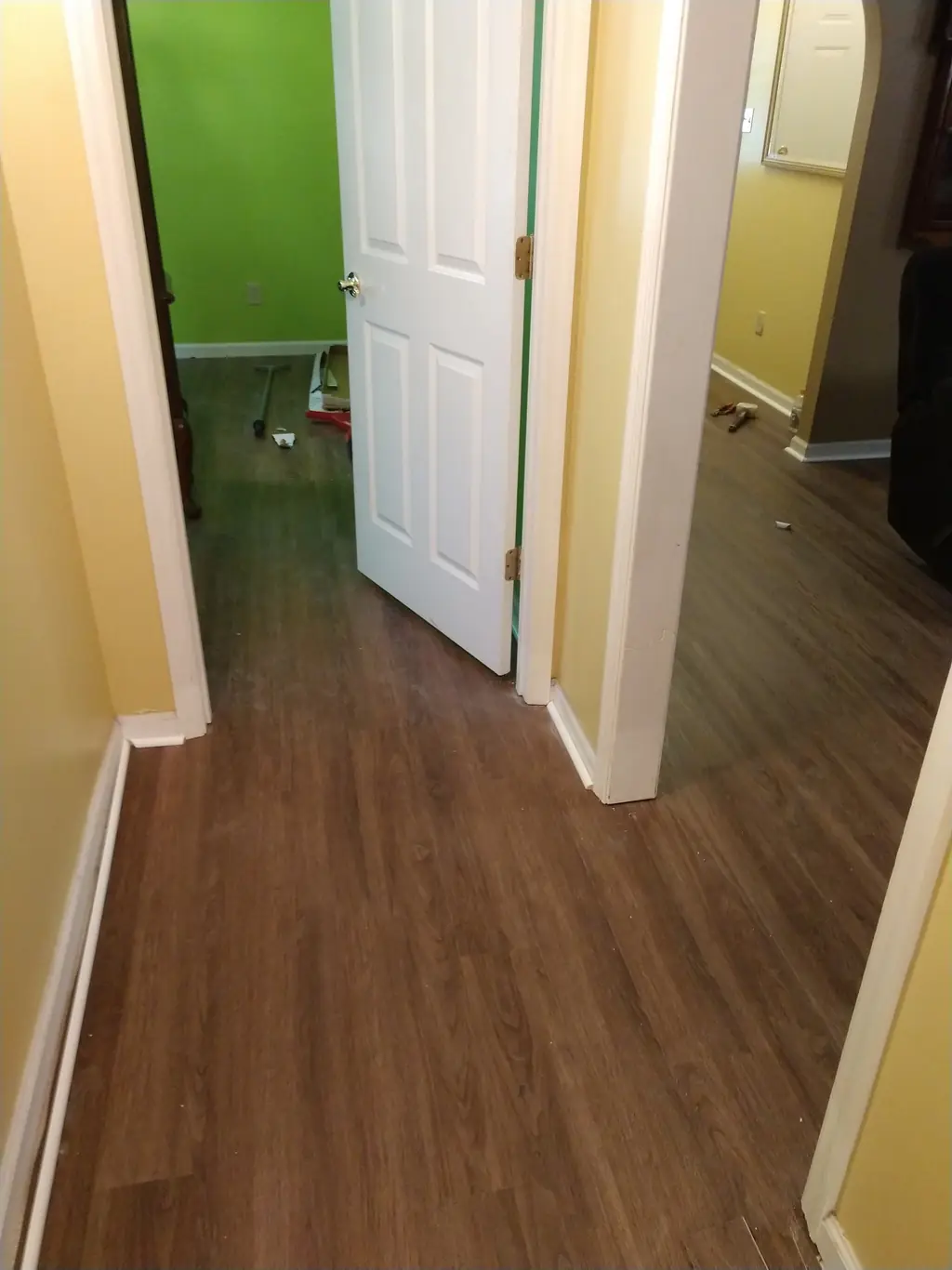
Before the Crew Arrives
The single biggest thing a homeowner can do to keep an install day on schedule is clear the work area before the crew shows up. That means furniture out of the room wherever possible, small items and breakables off shelves and out of closets that will see foot traffic, and a clear path from the front door to the work area so material and tools can move in and out without navigating around boxes. Pets are usually happier in a closed off room or with a friend for the day, both for their own comfort with the noise and so nobody has to worry about a door left open at the wrong moment.
Tear-Out Comes First
If there's existing flooring to remove, that happens before anything new goes down. Carpet comes up along with the tack strips and padding underneath, old tile gets broken out, and old vinyl or laminate gets pried up and disposed of. Tear-out is dusty, sometimes loud work, and it's also the point where an installer finds out what's really underneath the old floor. Old adhesive residue, uneven spots in the subfloor, or moisture staining that wasn't visible before all tend to surface right here, and a good crew will flag anything that needs addressing before laying new material rather than covering it up.
How Long a Job Actually Takes
Timelines vary with square footage, the material chosen, how much tear-out is involved, and how many rooms are connected by a single continuous layout. A single bedroom is a very different job from a whole house, and no two homes have identical subfloor conditions once the old flooring comes up. A straightforward click-lock LVP job over a subfloor that's already in good shape can move noticeably faster than a job that involves tearing out old tile, correcting a slab, and installing a second material like porcelain in a bathroom along the way. Rather than guessing at your own timeline from someone else's project, ask for an estimate of days when you get your quote, so you can plan around the household disruption realistically instead of assuming a fixed number.
What the Installers Actually Do, Room by Room
Material typically needs to acclimate to the room's temperature and humidity for a period before installation, especially wood and wood-look products. From there, installers plan the layout so plank or tile lines run in a sensible direction and pattern before a single piece goes down permanently, since changing direction mid-room after cuts have been made is far more disruptive than planning it up front. Cutting happens around doorways, closets and any odd angles in the room, followed by setting the material with adhesive or a click-lock system depending on the product. Transition strips get fitted at doorways where flooring changes from one room to the next, and quarter round gets set along the baseboards to cover the expansion gap every floating floor needs around its perimeter.
Protecting the Parts of the House That Aren't Getting New Flooring
A flooring project rarely stays perfectly contained to the room being worked on. Dust from tear-out travels through a house faster than most homeowners expect, especially if central air is running and pulling that dust through the return vents. Covering vents in the work area, closing doors to unaffected rooms, and laying down protective covering along the path the crew uses to move material in and out all keep the mess where it belongs. It's also worth walking baseboards and door casings in the work area before install day and pointing out anything already scuffed or chipped, so there's no confusion afterward about what condition they were in beforehand.
After They Leave
Dry and cure times depend on the material and the adhesive used, and a crew should tell you what's safe to walk on immediately versus what needs a day or more before furniture goes back. When you do move furniture back in, felt pads under every leg protect the new finish from day one, and a walk off mat at exterior doors keeps grit from being tracked across a floor that's still brand new. If anything looks off once the dust settles, whether that's a gap at a transition or a spot that feels different underfoot than the rest of the room, it's worth a call before it becomes a habit you just get used to living with.
Superior Flooring Solutions, (478) 449-4220
Call (478) 449-4220More articles
What the Wear Layer on Luxury Vinyl Plank Actually Means
The number printed in small type on the box tells you more about how long a floor will look good than the color ever will.
LVP vs Tile vs Wood-Look: Choosing the Right Floor for a Middle Georgia Home
The right material often comes down to the room and the climate before it ever comes down to style.