Wet rooms
Tile and porcelain
Bathrooms, entries, anywhere that gets wet and stays wet. A flat substrate decides how the finished floor sits more than the tile itself does.
Why the floor under the tile matters more than the tile
Porcelain is denser and absorbs less water than ceramic, which is exactly why it turns up in bathrooms and entries. But density is only half the job. Lippage, one tile edge sitting proud of its neighbour, comes from the substrate underneath being out of flat, not from the tile itself. The flatter the floor is before a single tile goes down, the tighter and more even the finished surface reads. Grout joint width follows the same logic in reverse: a bigger joint hides more variation in a floor that isn't perfectly flat, a tight joint on large-format tile only looks right over a substrate that has been brought properly level first.
What a bathroom job actually involves
One customer here remodelled a master bath and an upstairs bath at the same time, and staff walked the tile selection with them before either room was touched. They ended up on Italian porcelain, and the master bath alone measured eleven and a half feet by fourteen, enough floor that the setting-out plan matters before the first cut is made. Wet rooms also get movement joints where the floor meets a wall or another surface, and waterproofing behind and beneath the tiled area generally, so the water that gets past the grout line has somewhere safe to go instead of into the subfloor.
Two bathrooms, one job, same customer trusting the showroom to help pick the material both times. That kind of repeat trust inside a single project is the clearest signal we have that people liked what they walked out with the first time.
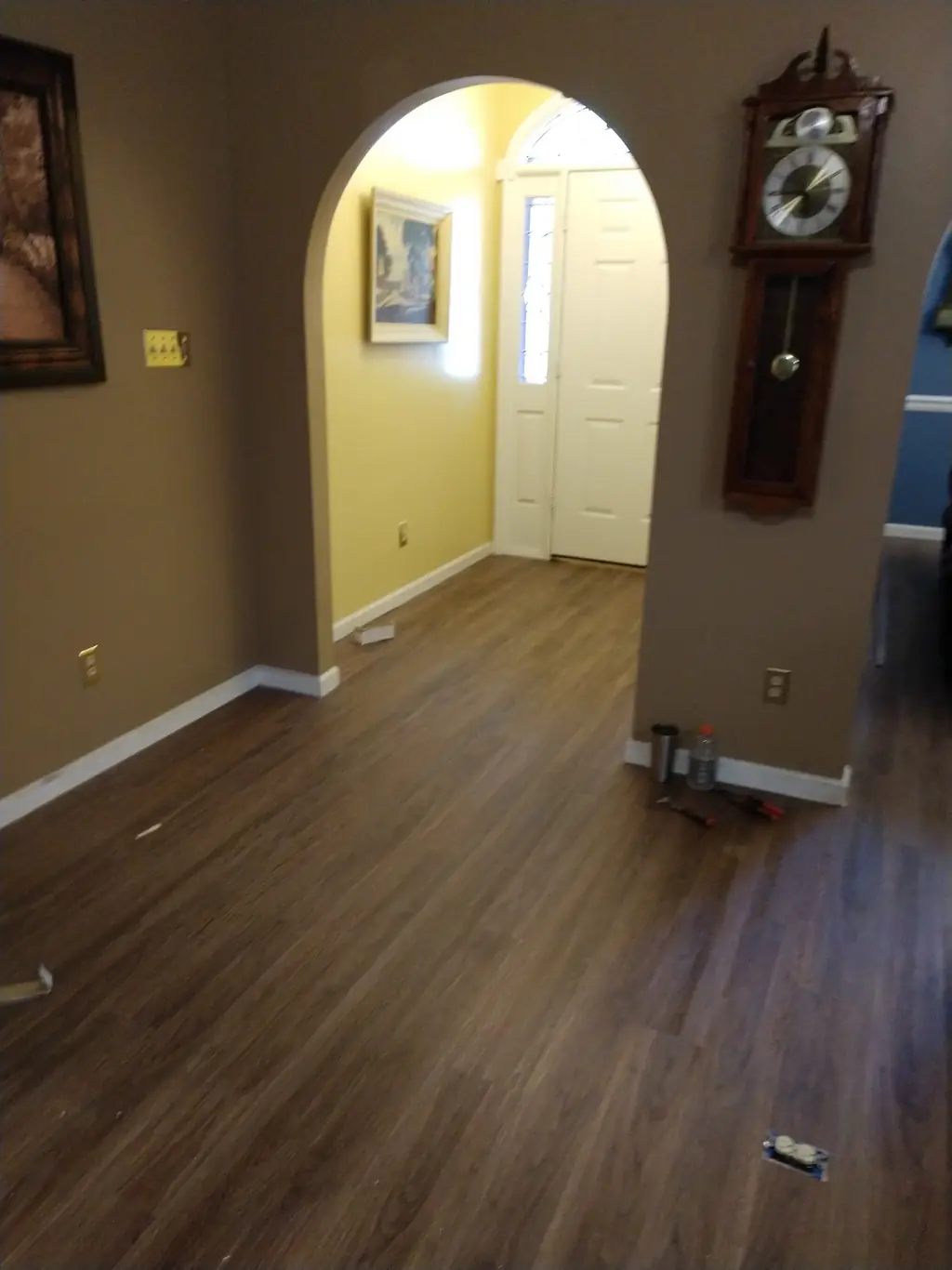
Before the tile arrives
Flat first, then the pattern
Most of the visible decisions, tile size, grout colour, whether it runs straight or on a diagonal, get made in the showroom looking at samples under real light. The decision that determines whether that plan actually looks the way it did on the sample board happens underneath, before any of it is visible: bringing the substrate to flat, setting the movement joints where they belong, and waterproofing the areas that need it before the finish goes down over the top.
A short way to say it
A flat floor makes a small grout joint possible. An uneven one makes a small grout joint a problem you can see from the doorway.
Walk the tile before you buy it
Bring your bathroom or entry measurements and we will talk through tile size, joint width and what the substrate needs before anything gets ordered.
Living room or hallway instead? Luxury vinyl plank. Matching wood already in the house? Wood-look flooring. Or see everything we fit.