Why a Floor Telegraphs Every Bump Underneath It
Every dip, ridge and loose board underneath eventually shows up on the surface, just later than you'd expect.
August 26, 2026 · 3 min read
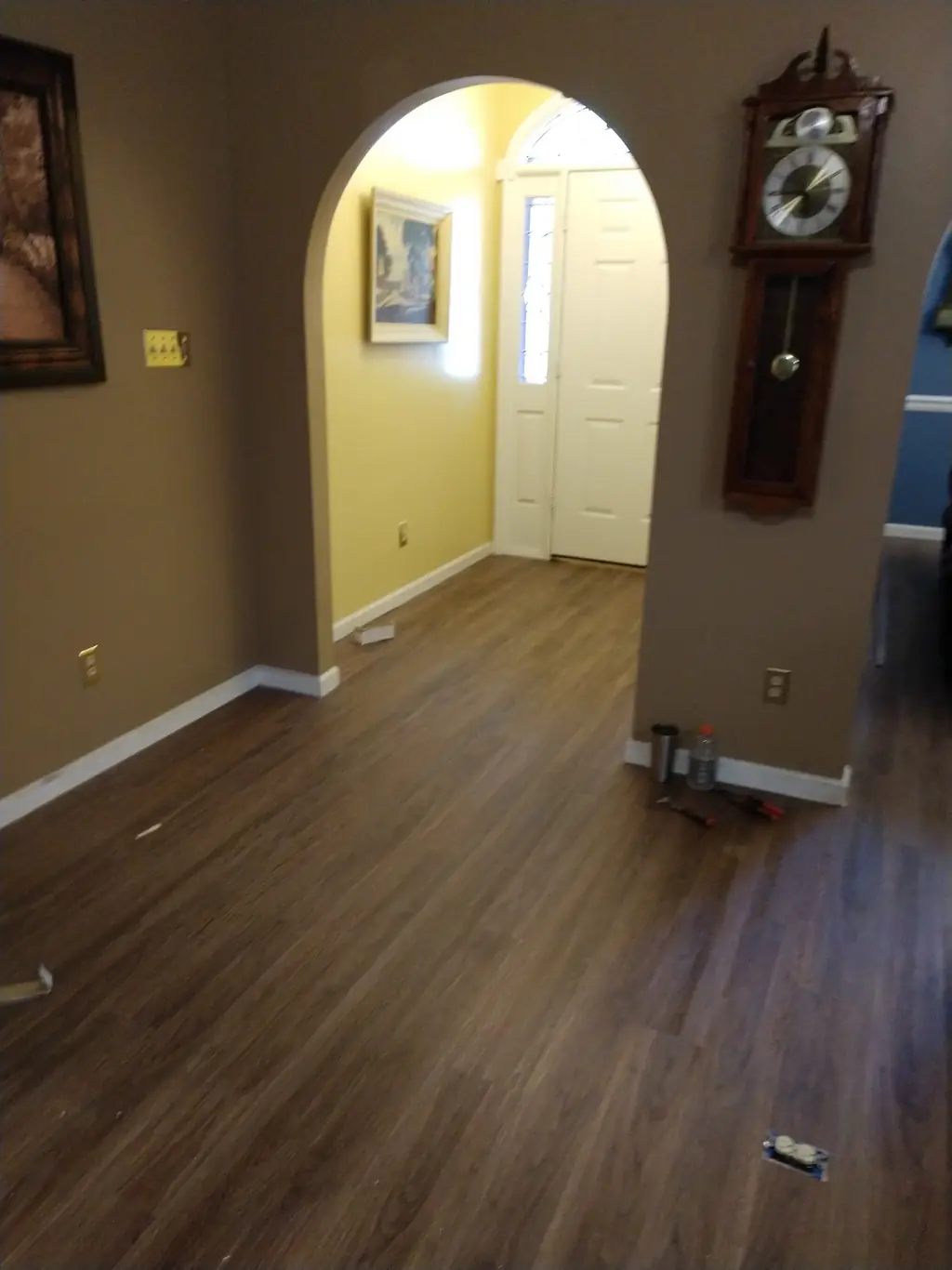
The Floor Only Looks As Good As What's Under It
Flooring installers call it telegraphing: a bump, dip, or ridge in the subfloor that shows through the finished surface once new flooring goes down on top of it. It's most obvious with thinner materials, but even a thicker rigid-core LVP or a tile installation can eventually reveal what's underneath if the subfloor wasn't properly prepped first. The finished floor is only ever as flat and stable as the surface it's sitting on, no matter how good the material on top is.
Common Subfloor Problems in Middle Georgia Homes
Houses built on a concrete slab can have high spots or low spots left over from the original pour, sometimes off by more than the eighth of an inch that most flooring manufacturers specify as a maximum variance. Homes with a plywood or OSB subfloor over a crawl space can develop squeaks or slightly loose panels over time, especially in older construction, and humidity moving through a crawl space can affect that wood subfloor in ways that aren't visible from the room above. Old adhesive residue left behind from a previous flooring installation is another common issue, since a new floor glued or clicked down over old, uneven glue lines will show every ridge that residue left behind.
What Prep Actually Looks Like
- Self-leveling compound poured and spread across a concrete slab to correct low spots before flooring goes down
- Sanding or grinding down high spots that a leveling compound alone won't fix
- Screwing down loose or squeaky plywood panels so the subfloor is solid underfoot before anything new sits on top of it
- Checking moisture levels in a slab or crawl space subfloor and addressing them before they're sealed under a new floor
- Scraping and cleaning old adhesive residue so a new installation isn't telegraphing the outline of a floor that was removed years ago
Tile Adds Its Own Layer of Prep
Tile has a subfloor requirement most other materials don't: it needs a rigid, crack-resistant surface underneath it, because tile and grout don't flex the way vinyl or wood can. That usually means cement backer board over a plywood subfloor, or a crack isolation membrane over a slab that has hairline cracks too small to repair outright but still capable of transferring movement up into a tile floor above. Skipping that layer is one of the more common reasons a tile installation develops cracked grout lines or, in worse cases, a cracked tile itself within the first year or two, long after the room looked finished and the crew had moved on.
Why Skipping This Step Shows Up Later, Not on Day One
A floor installed over a poorly prepped subfloor can look completely fine on the day it goes in. The problems tend to surface months later, once foot traffic, furniture weight and normal seasonal movement have had time to work on a surface that wasn't flat or stable to begin with. That's exactly why the prep work matters more than it looks like it should during a walkthrough. A homeowner comparing two quotes rarely sees the difference between them in the subfloor line item, but they'll eventually feel it underfoot in how flat and quiet a well-prepped floor stays years down the road compared to one that wasn't.
Prep work also takes real time, and it's worth building that into your expectations before install day rather than being surprised by it. Self-leveling compound needs time to cure before flooring can go down on top of it, and a subfloor with widespread moisture issues may need those issues resolved before any leveling work even starts. A crew that quotes an extra day or two for prep on a job with a rougher subfloor isn't padding the timeline, they're describing the actual work a flat, quiet, long-lasting floor requires underneath it.
Ask About Prep Before You Ask About Product
When you're getting a quote for a flooring project, it's worth asking directly what subfloor prep is included and what condition the crew expects to find once the old flooring comes up. A straightforward answer up front is a better sign than a quote that skips the subject entirely. Superior Flooring Solutions walks through subfloor condition as part of every quote at its Warner Robins showroom. Reach the team at (478) 449-4220 or 585 Carl Vinson Pkwy, Suite 800, Monday through Friday, 9 a.m. to 5:30 p.m.
Superior Flooring Solutions, (478) 449-4220
Call (478) 449-4220More articles
What the Wear Layer on Luxury Vinyl Plank Actually Means
The number printed in small type on the box tells you more about how long a floor will look good than the color ever will.
LVP vs Tile vs Wood-Look: Choosing the Right Floor for a Middle Georgia Home
The right material often comes down to the room and the climate before it ever comes down to style.